Spiders of the World | Vol. IAraneae · Order of the Web
California has over a thousand spider species across fifty-four families, but the fifteen in this guide account for roughly 90% of what you'll encounter. Eye arrangement settles most families on its own; silhouette, hunting style, habitat, and web architecture handle the rest. Only two groups — the widows and the recluses — have venom worth treating as a medical concern, and recluses are functionally absent from most of the state.
Look by time of day. Jumpers, lynxes, crabs, and wolves hunt in daylight and are the easiest to watch. Widows, cellar spiders, funnel weavers, and most web-builders retreat by day and emerge at dusk — a flashlight after dark often reveals more than an afternoon walk. Season matters, too: male tarantulas wander in late summer, orb-weavers peak in autumn, and mature female widows are most visible from late spring on.
Eye-Arrangement Key
§ Primary Diagnostic
Spider eyes are arranged in family-specific geometries. View from directly in front. Count the rows, note relative sizes, look for tight clusters or pairs.
two huge forward eyes
Salticidae · jumpers
two huge middle eyes
Lycosidae · wolves
Mygalomorphs
tight bump
hexagonal ring
Oxyopidae · lynx
six in a tight oval
Dysderidae · sow-bug killer
three pairs (diads)
Sicariidae · recluse
eight in two rows, laterals set apart
Araneidae · orb-weavers
Size at a Glance
§ Leg-span across
Tiny
< 15 mm
rice
sheet weavers
Small
15 – 30 mm
grape
jumpers
widows
crab spiders
parson
sow-bug killer
recluse
false wolf
Medium
30 – 60 mm
lime
orb weavers
funnel weavers
cellar
lynx
Large
60 – 100 mm
orange
wolf spiders
turret
Very Large
> 100 mm
grapefruit
tarantulas
The Families
Family 01
Headlight AME 4–2–2 rows
Leap Hunter
Salticidae
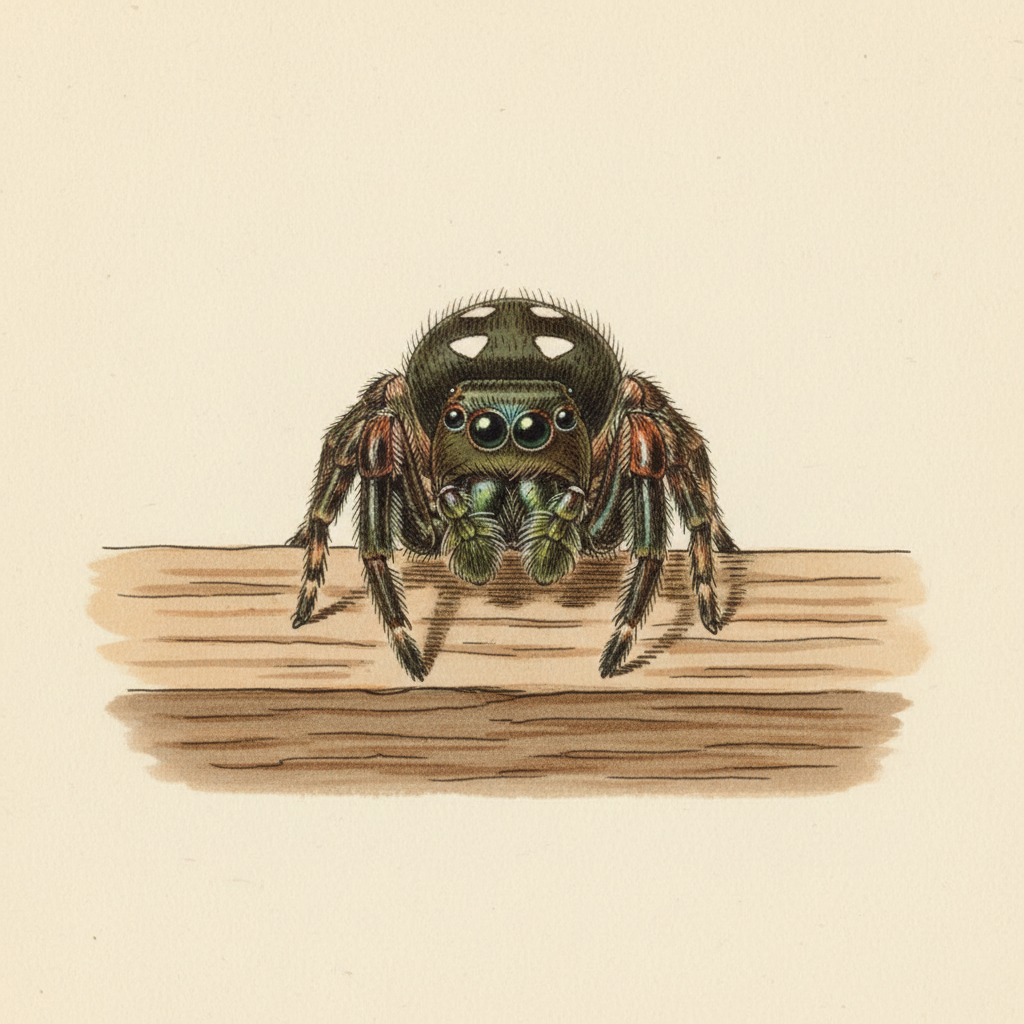
Jumping Spiders
Quick ID Tell
Two huge forward-facing eyes like car headlights on a stocky, short-legged body. Often turn to face you. If it watches you back, it's a jumper.
Quick ID Tell
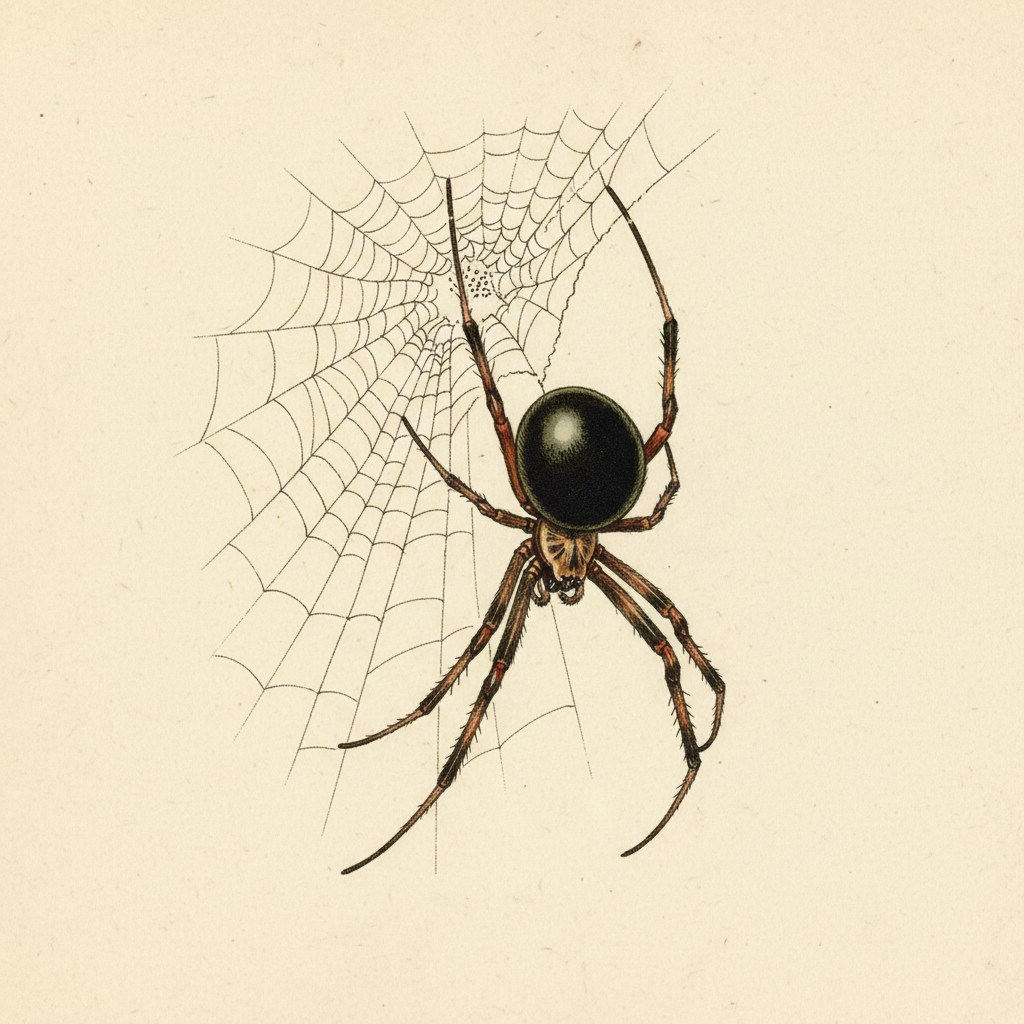
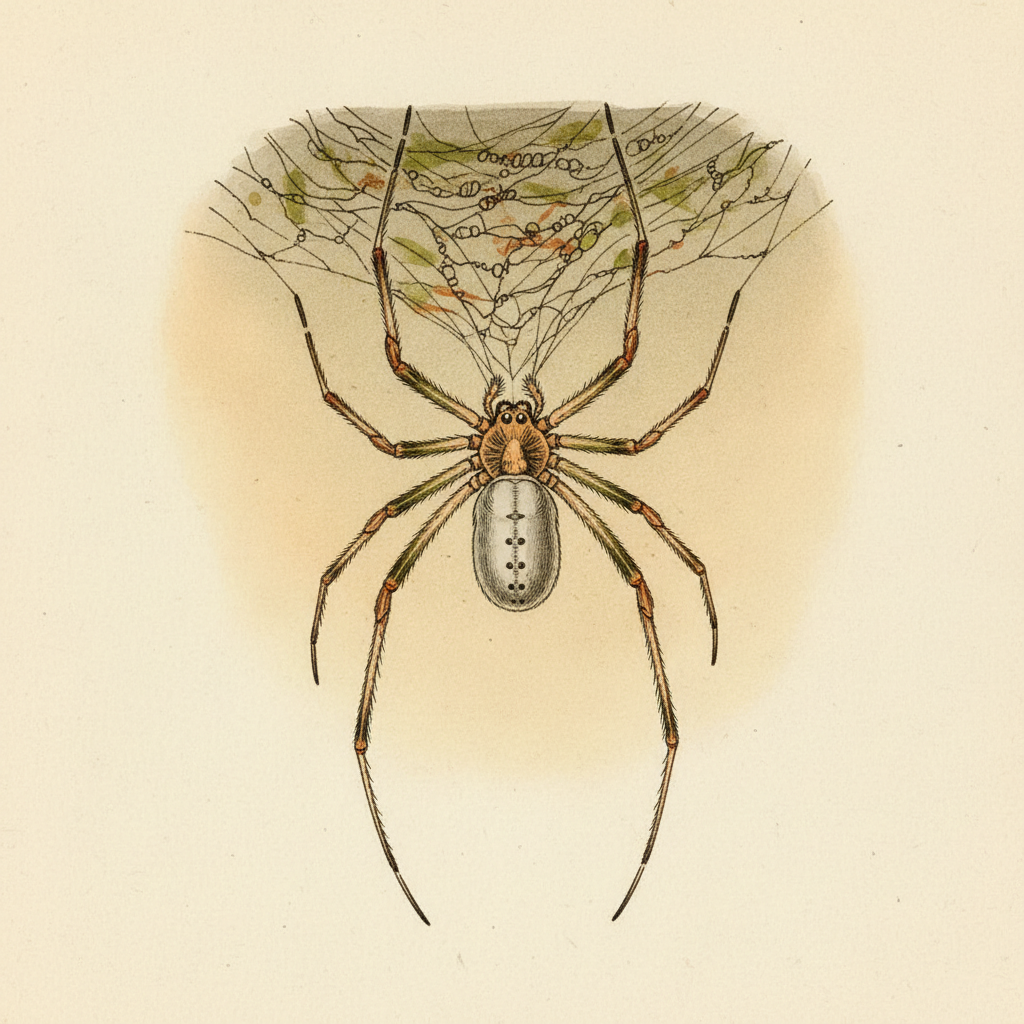
Glossy, globe-shaped abdomen much larger than the head, hanging upside down in a messy tangle web. Comb of serrated bristles on back leg tips (rarely visible without a lens).
Size
3–15 mm. Mature female black widow: 8–13 mm body, much bigger than male.
Web Type
Irregular cobweb, no ordered geometry. Sticky sticky-tipped threads anchor to ground/surface.
Habitat
Sheds, undersides of furniture, woodpiles, rock crevices, garage corners.
Body
Legs long and thin; abdomen is the biggest, most glossy part. Widows have red hourglass on the underside.
Quick ID Tell
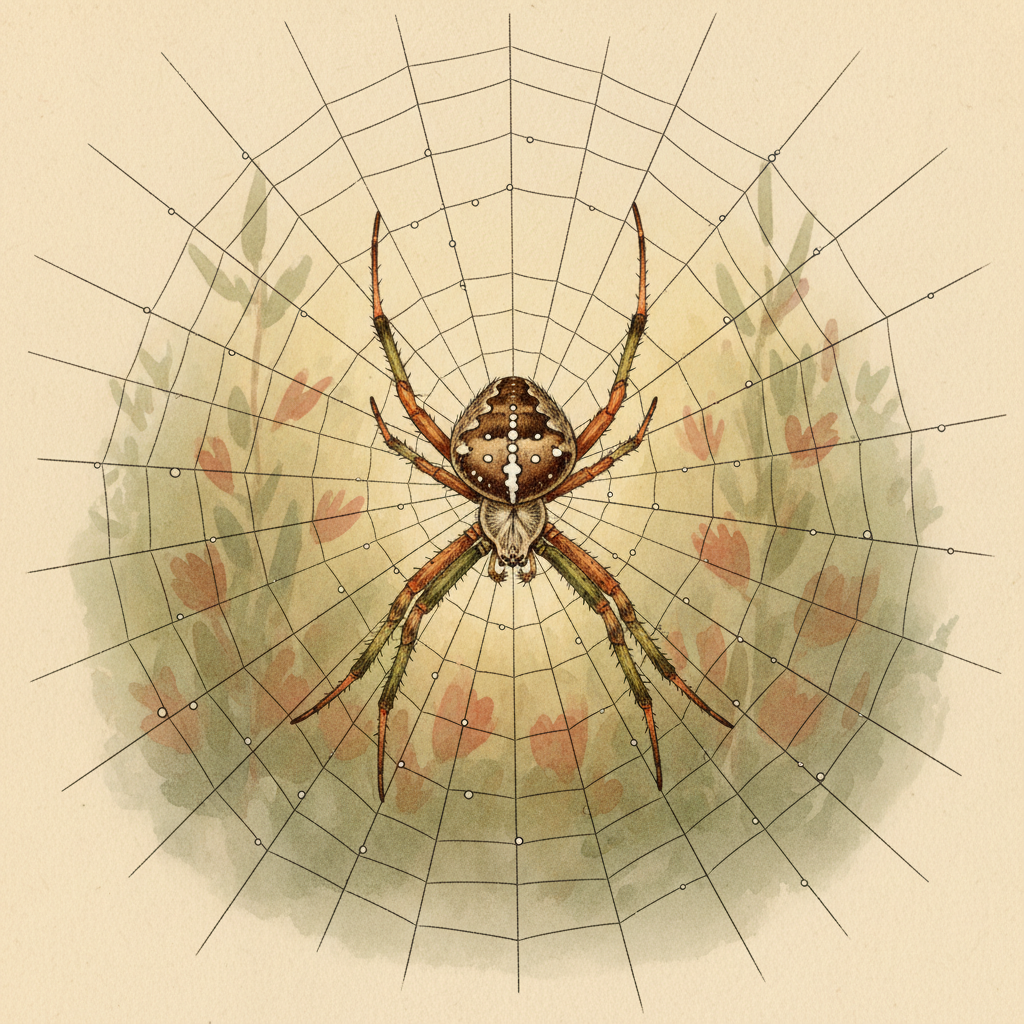
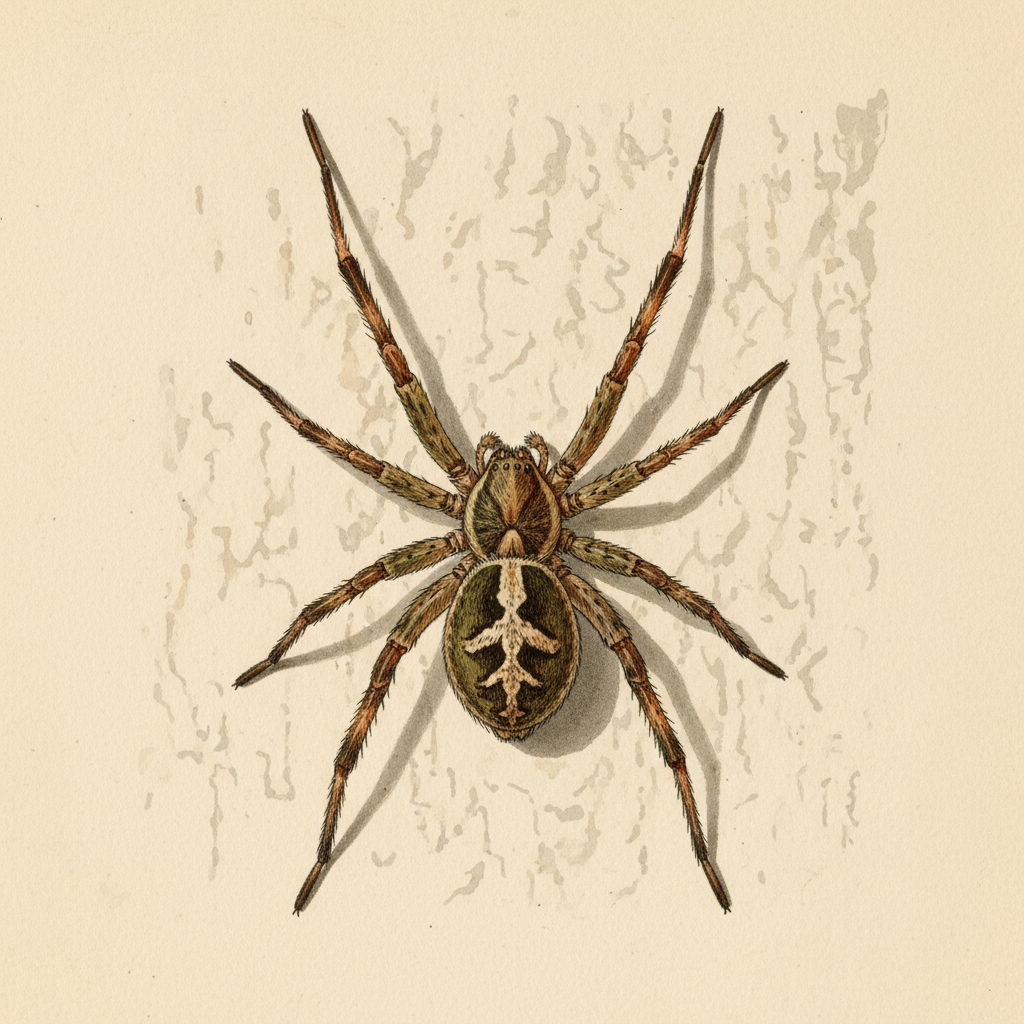
Geometric wheel-and-spoke web hung in open air. Spider sits head-down in the center or hides in a nearby leaf retreat. Abdomen usually bulbous, often patterned.
Size
5–25 mm. Females much larger than males.
Web Type
Vertical orb with radial spokes and spiral sticky thread. Often rebuilt nightly.
Habitat
Between shrubs, eaves, fences, garden gaps. Active at night, hidden by day.
Body
Abdomen larger than front body, often with top-side markings (leaf-shaped pattern). Eight legs held in X or spread on web.
Top California Species
Araneus diadematus— Cross orb-weaver, white cross on abdomen, introduced but common
Neoscona oaxacensis— Western spotted orb-weaver, dominant in coastal gardens
Quick ID Tell
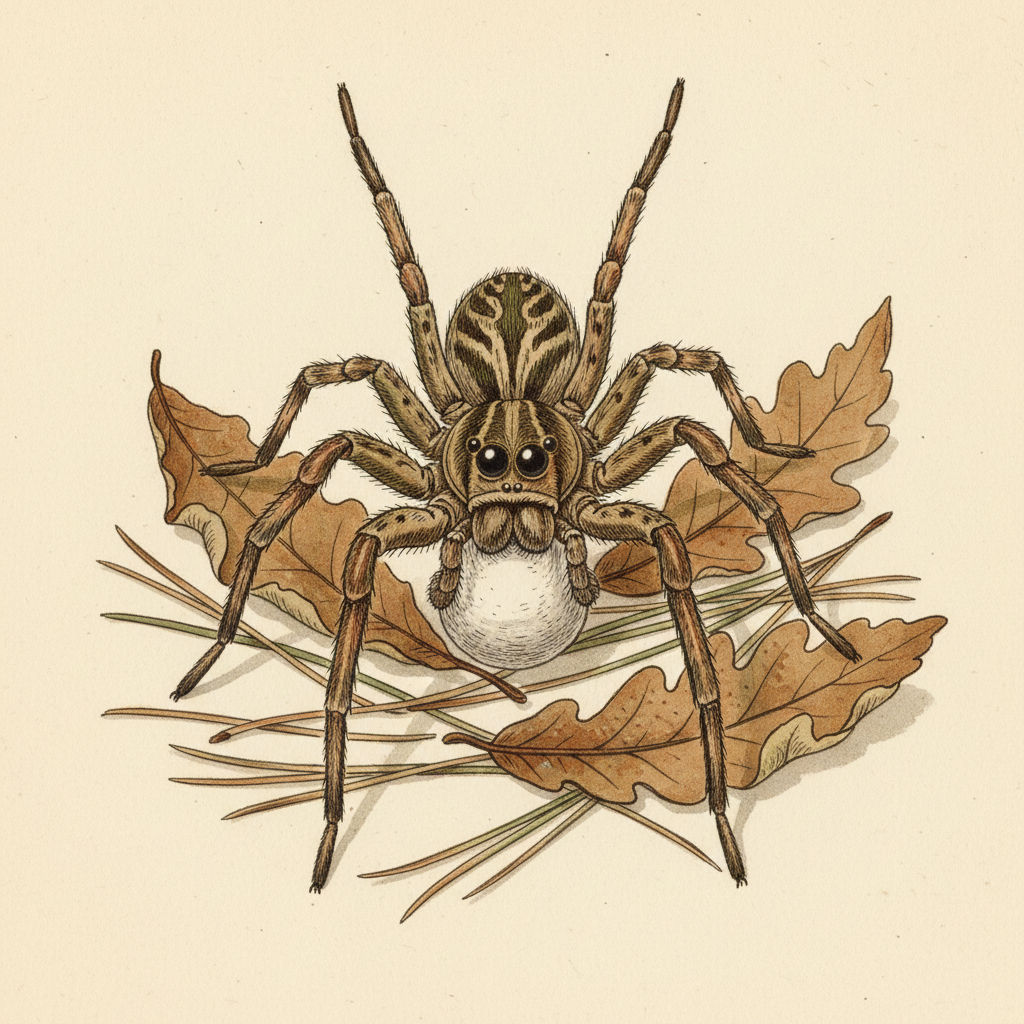
Large ground spider with two oversized eyes staring straight up at you from a row of four small eyes. Eyeshine at night (reflective eye layer). Females carry egg sacs attached to silk spinners.
Size
10–30 mm body.
Hunting Style
Active at night on the ground. Some build burrows with silk-lined entrances.
Habitat
Leaf litter, under rocks, lawns, trail edges. Enter homes in fall.
Body
Drab brown/gray lengthwise stripes. Legs long, muscular, sprinter's build. Mothers carry spiderlings on back.
Quick ID Tell
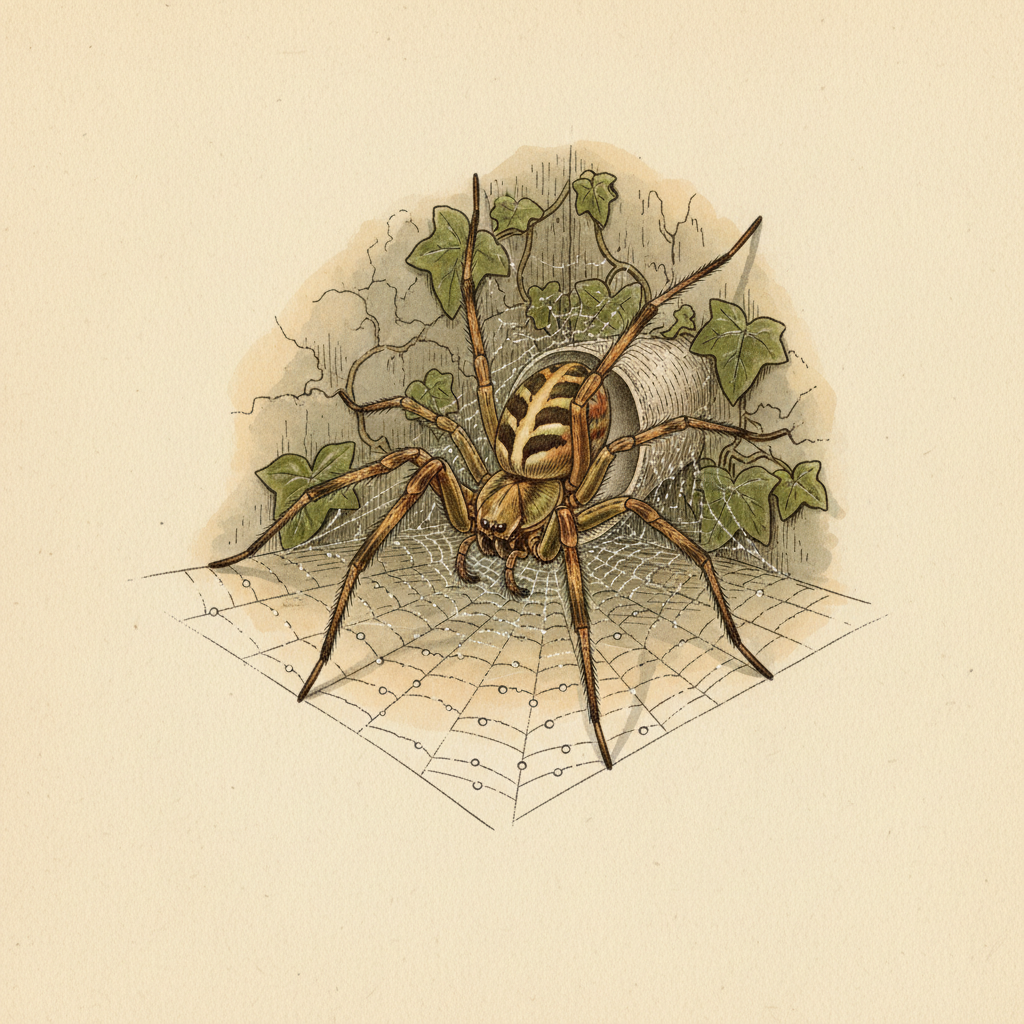
Flat sheet web ending in a tubular funnel retreat. Spider waits just inside the funnel, ready to charge out. Two prominent rear silk spinners protrude past the abdomen.
Size
6–20 mm body.
Web Type
Horizontal sheet plus funnel retreat. Non-sticky; relies on speed.
Habitat
Corners of ground-level vegetation, rock piles, under eaves, tall grass.
Body
Brown lengthwise markings; front body often with darker band. Legs long.
Quick ID Tell
Tiny pale body with legs four to five times longer. Hangs inverted in a loose mess of web in a basement corner. Vibrates body wildly when disturbed (whirling defense).
Size
2–10 mm body; leg span to 50 mm.
Web Type
Tangled, irregular, non-sticky. Catches prey including other spiders.
Habitat
Ceilings, cellars, garages, crawl spaces, vegetation in southern CA.
Quick ID Tell
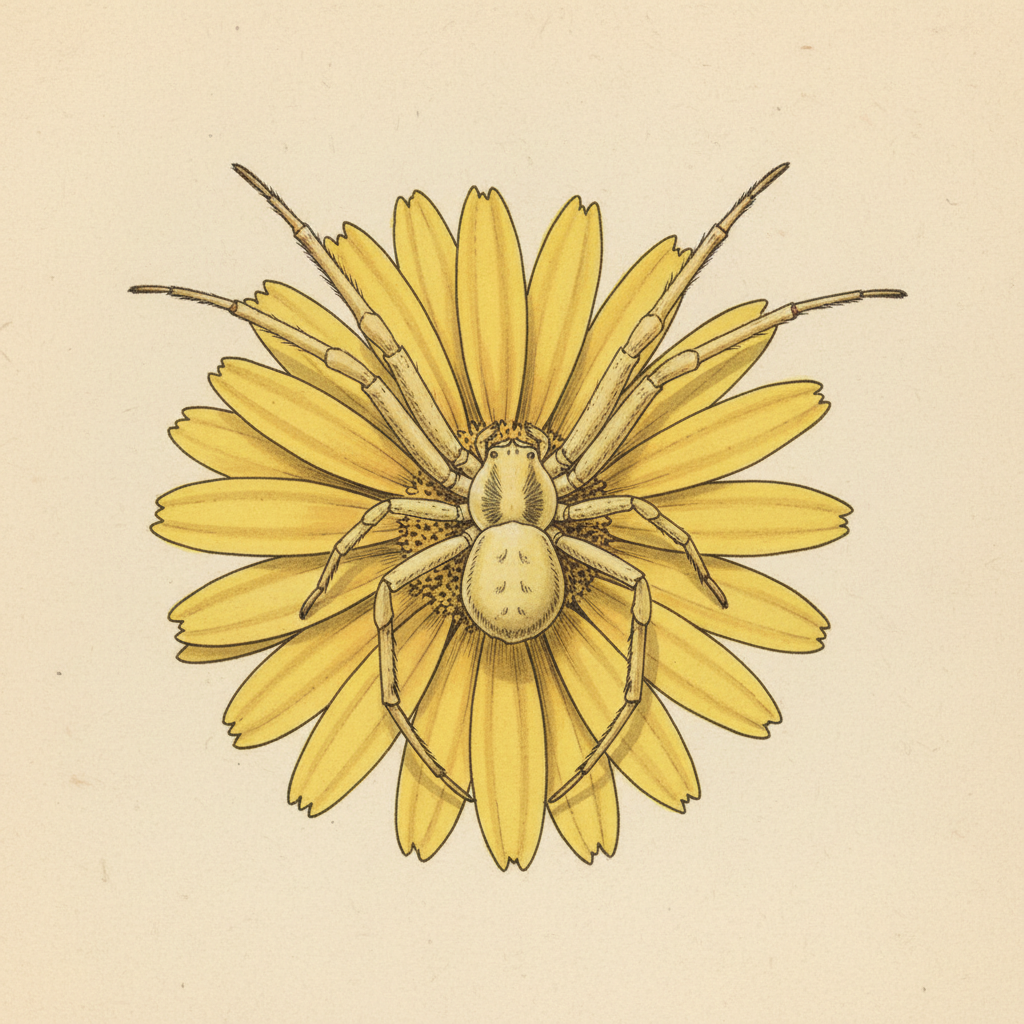
First two pairs of legs enormously longer than the back two, held sideways like crab claws. Walks sideways. Often sits motionless on a flower.
Size
4–10 mm body.
Hunting Style
Ambush on flowers. Many species can change color (yellow ↔ white) over days.
Habitat
Petals, flower heads, foliage. Spring through fall.
Body
Abdomen wider than long in some genera, angular shoulders.
Top California Species
Misumena vatia— Goldenrod crab spider, color-shifter, white to yellow
Quick ID Tell
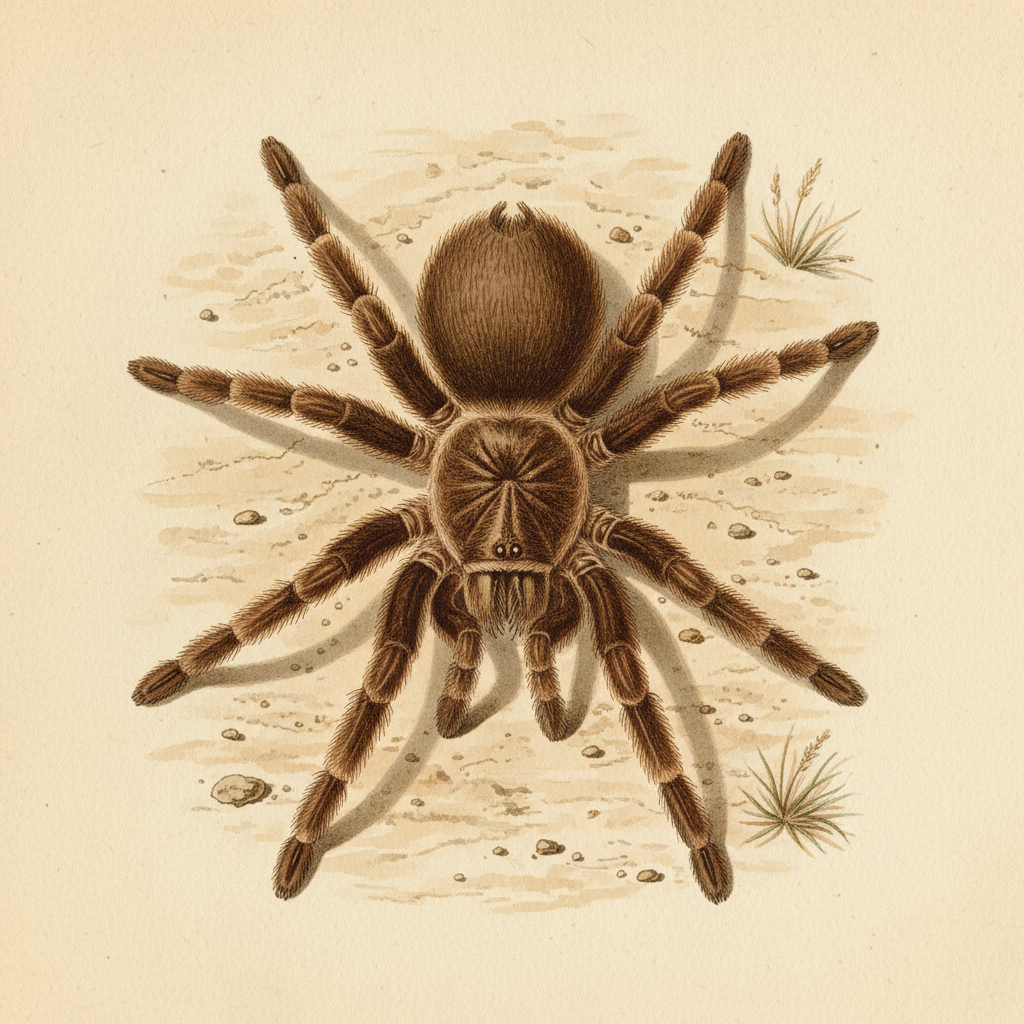
Very large, hairy, with fangs that strike downward (not sideways). Walks with a distinctive "ambling" gait. In CA, almost always Aphonopelma. Males wander in late summer / early fall looking for mates.
Size
Body 40–70 mm. Leg span to 15 cm.
Hunting Style
Burrow-dwelling ambush predator. Fangs strike straight down (orthognathous).
Habitat
Grasslands and oak woodland of inland CA; Central Valley, Diablo Range, foothills. Not typical in coastal Bay Area.
Body
Uniformly hairy, usually black or brown, legs thick. Urticating hairs kicked from abdomen in defense.
Quick ID Tell
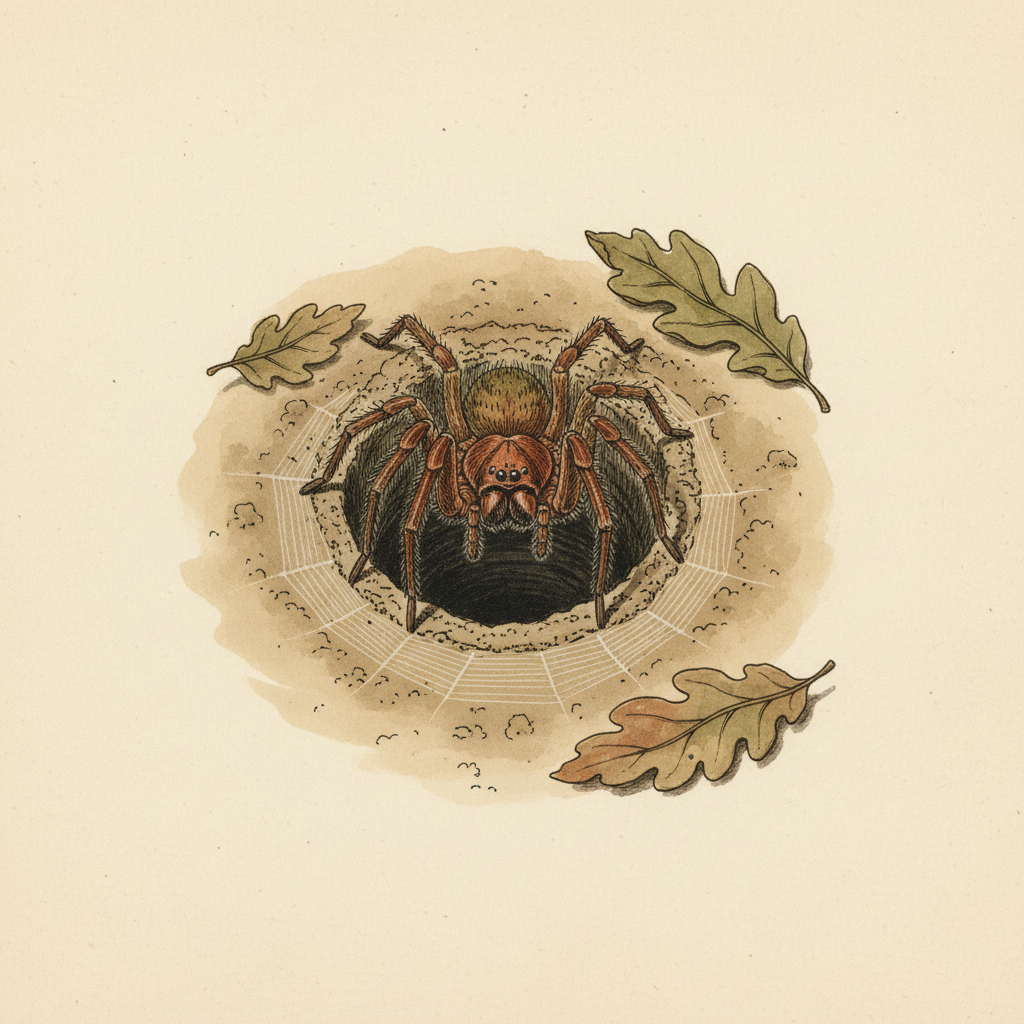
Looks like a small tarantula but smaller, less shaggy, and distinctly more active/aggressive. Builds silk-lined burrow with sheet web at entrance. Extremely common in Oakland and East Bay hills — the "tarantula" most people in the Bay Area see is almost always this.
Size
15–30 mm body. Legs robust but not as thick as tarantulas.
Hunting Style
Burrow with entrance webbing; ambushes passing prey. Mygalomorph (orthognathous fangs).
Habitat
Coast Range hills, oak woodland, grassy slopes. Oakland hills especially abundant.
Body
Brown to reddish-brown. Less uniformly hairy than tarantula. Males wander in fall.
Quick ID Tell
Looks like a wolf spider on the wall of your house. Mediterranean invader now common throughout Bay Area homes. Cribellate (uses hackled silk); legs stouter and body flatter than Lycosidae.
Size
10–20 mm body.
Hunting Style
Active night hunter. Lays patches of cribellate silk near resting spots.
Habitat
Inside walls, behind furniture, basements, garages. Less often outdoors in CA.
Body
Mottled brown with chevron or banding on abdomen. Eyes small, even — no wolf-spider giants.
Top California Species
Zoropsis spinimana— Introduced from Europe; now established throughout SF Bay Area
Quick ID Tell
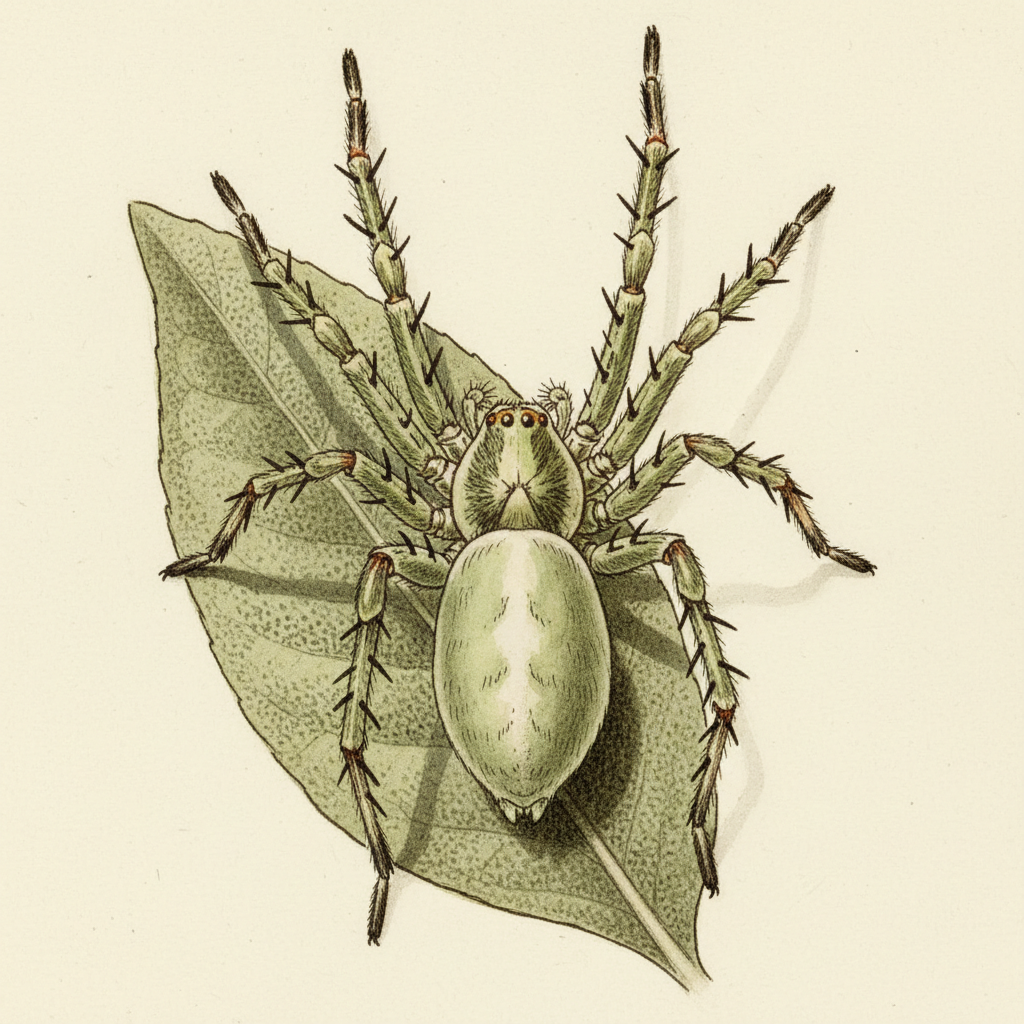
Slender green or pale spider on foliage with obvious black spines sticking out from the legs. Six eyes in a hexagon on the front of the head. Leaps after prey like a small jumper.
Size
8–18 mm body.
Hunting Style
Active daytime hunter on plants; leaps on prey. No snare web.
Habitat
Foliage, chaparral, gardens. Often bright green (Peucetia) on leaves.
Body
Abdomen tapered to a point; legs with prominent black spines set at angles.
Top California Species
Peucetia viridans— Green lynx, striking translucent green with red eyespots
Oxyopes scalaris— Western lynx, smaller, brown and cream striping
Quick ID Tell
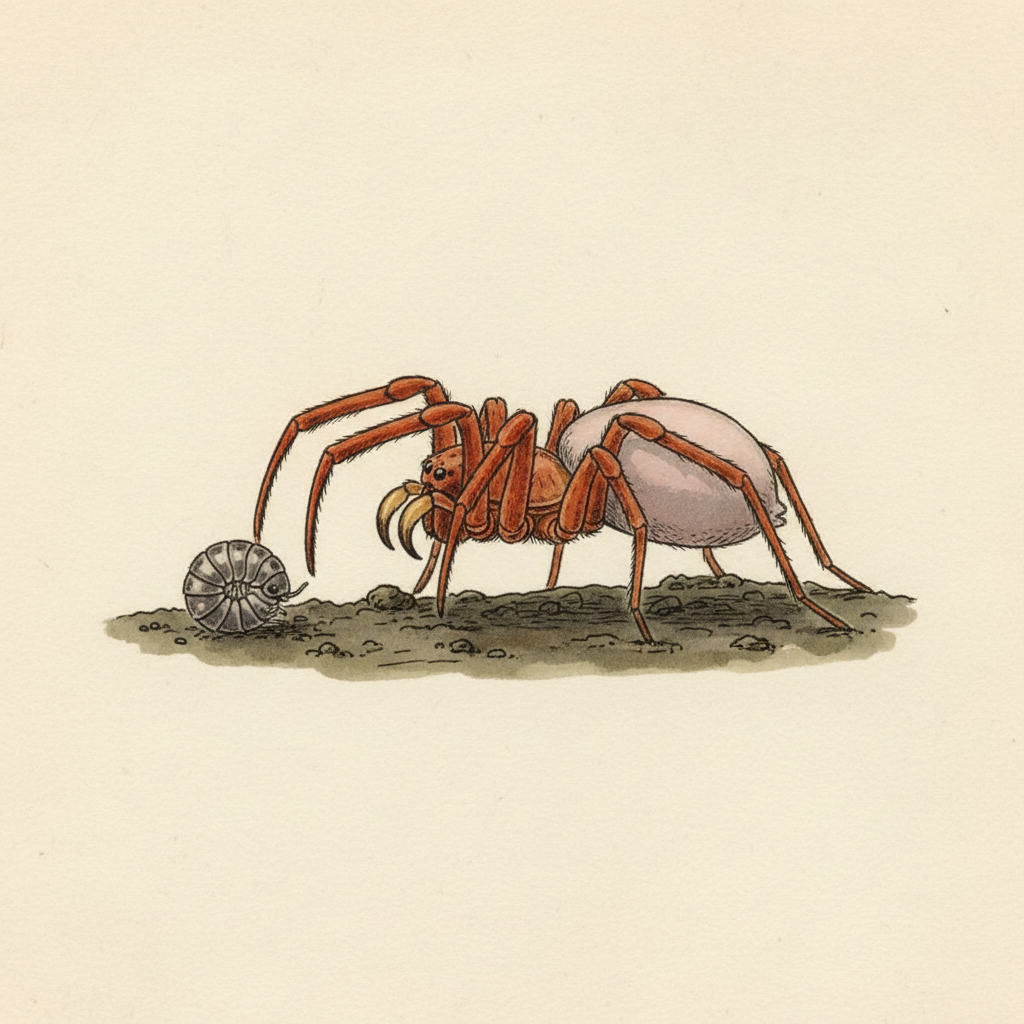
Striking: dark red-orange front body and legs, pale pink-gray abdomen, six eyes in a tight oval, fangs that project forward like curved tusks. Hunts sow bugs specifically. Found under bricks and flowerpots.
Size
9–15 mm body.
Hunting Style
Hunts on the ground at night. Enlarged fangs pierce sow bug armor. Can bite defensively, but the bite is not serious.
Habitat
Damp gardens, under stones, compost, wood. European introduction, widespread in CA.
Body
Two-toned — rust front, pale back. No web (except for small silk resting sac).
Top California Species
Dysdera crocata— Only species typically seen; introduced, cosmopolitan
Quick ID Tell
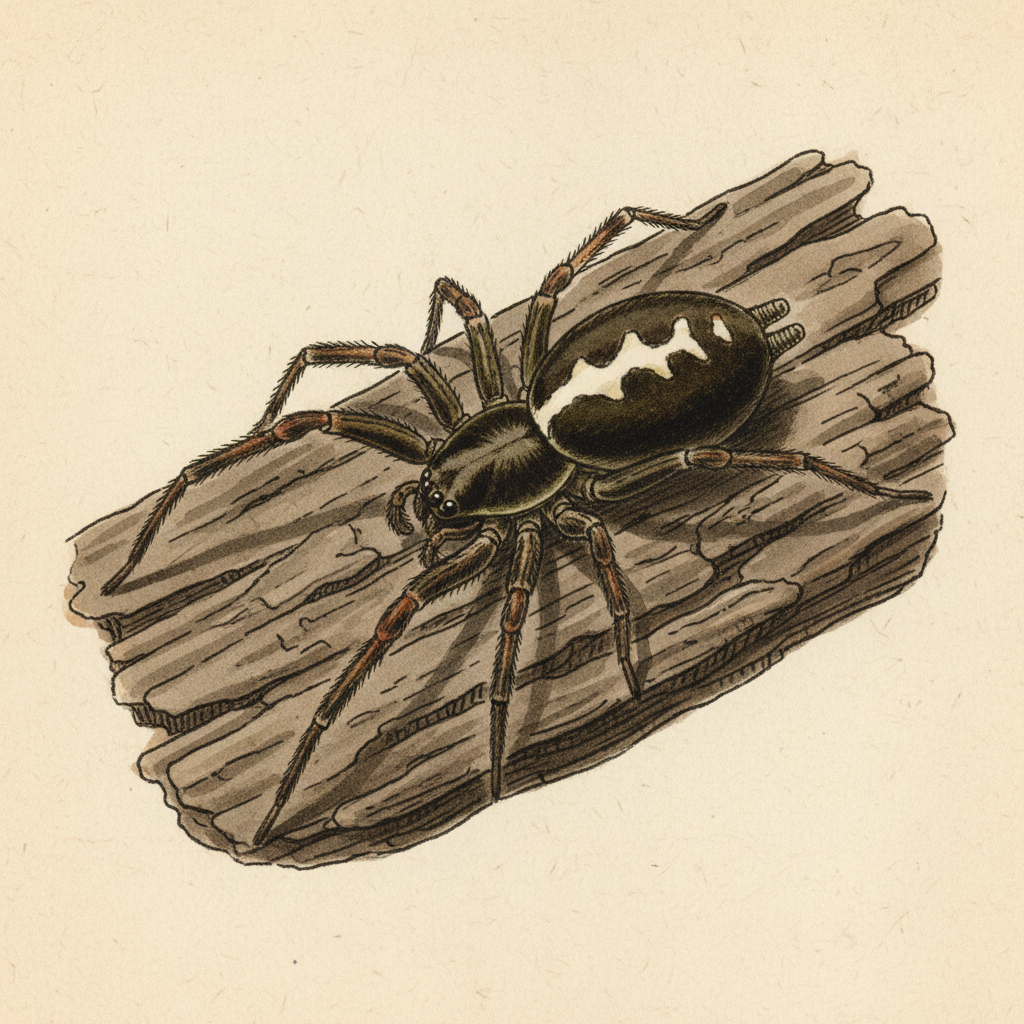
Fast-moving, flattened, often uniformly dark ground spider. Look for distinctly cylindrical, wide-spaced silk spinners sticking out the back end — visible even without magnification. Back middle eyes often flattened, oval, or silvery.
Size
3–15 mm body.
Hunting Style
Active at night. Silk retreat sac under rocks or bark.
Habitat
Ground, under rocks, logs, leaf litter. Sometimes enter homes.
Body
Elongated. Front body oval, abdomen often a single matte color.
Quick ID Tell
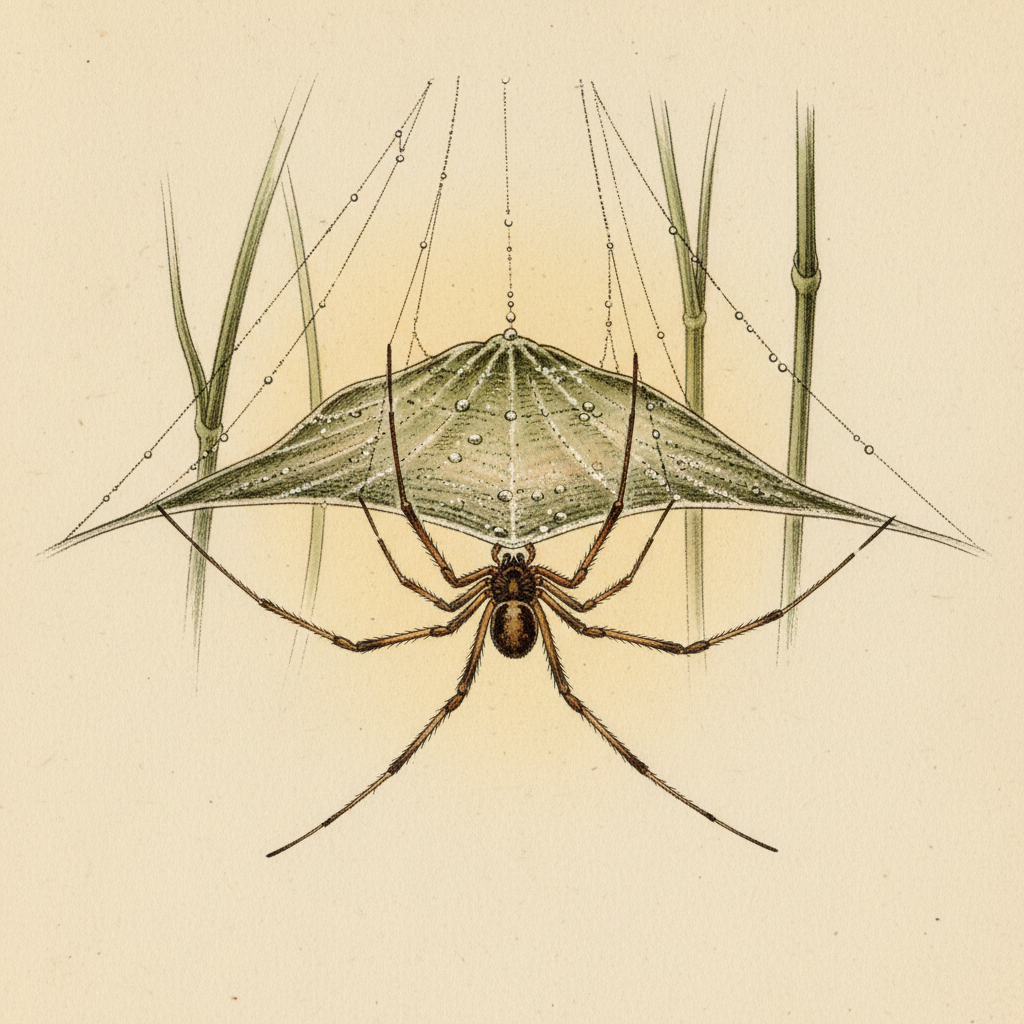
Very small spider (often 2–3 mm) hanging upside down beneath a horizontal or domed sheet web strung in low vegetation. Morning dew in a lawn reveals dozens of these webs at once.
Size
1–7 mm body. Most are under 3 mm.
Web Type
Horizontal sheet with tangled "knock-down" threads above. Prey fall onto sheet from flight lines.
Habitat
Low vegetation, grass, mulch, shrubs. Dewy lawns in fall show them best.
Body
Often dark with faint patterns. Many species ride silk threads on wind (ballooning).
Top California Genera
Neriene litigiosa— Sierra Dome, huge conspicuous dome webs in shrubs
Frontinella— Bowl and doily, two-tier web architecture
Erigone and relatives — Tiny, often ballooning, ubiquitous
Quick ID Tell
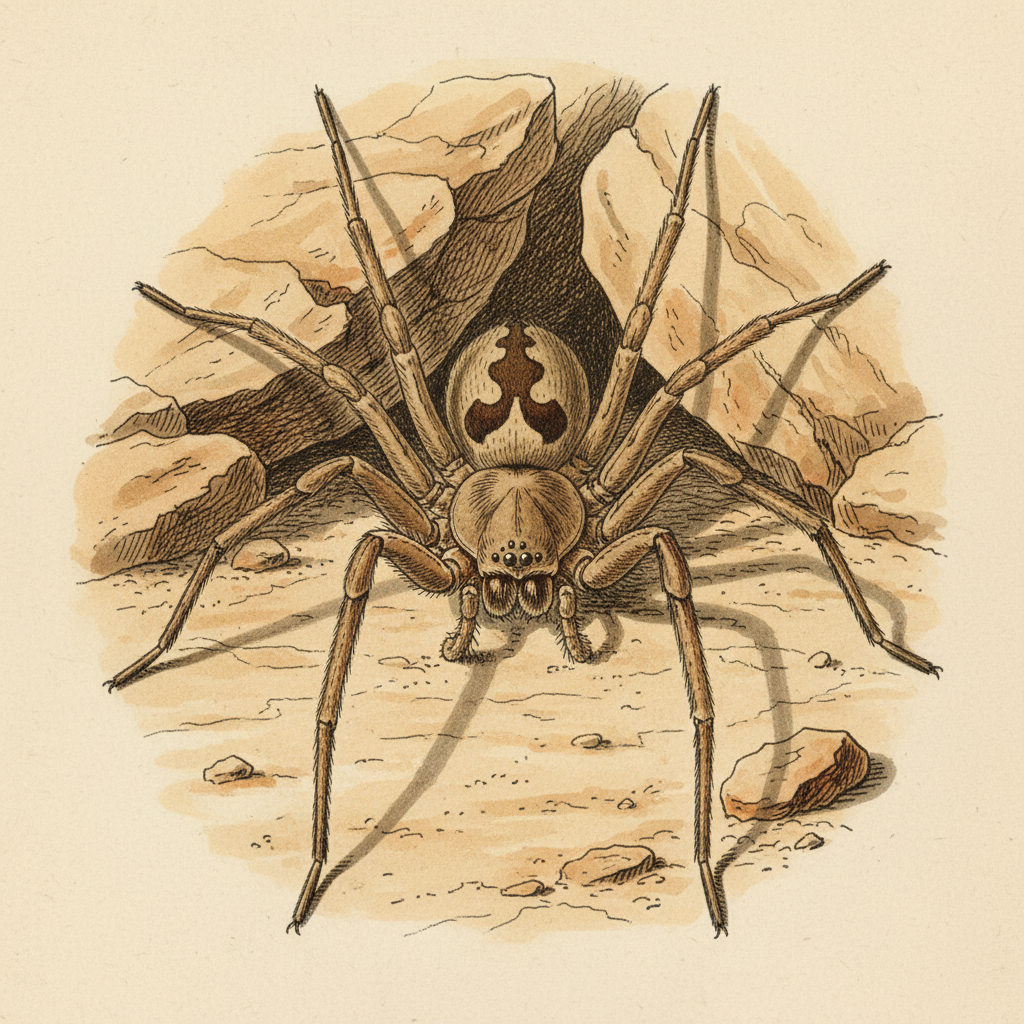
Drab tan, flattened body, long thin legs — but the diagnostic is six eyes arranged in three pairs (not eight). A dark violin shape may sit on the front body, pointing backward. Essential caveat: the brown recluse (L. reclusa) does not live in California. CA has native desert recluses, but they are rare and desert-restricted.
Size
6–12 mm body.
Hunting Style
Active at night. Retreats to irregular silk mat by day.
Habitat
In CA, desert shelters: rocks, crevices, abandoned burrows. Not in Bay Area homes.
Reputation
Overdiagnosed. Nearly all "recluse bites" in CA are misidentified: Staphylococcus infections, other spiders, or unknown causes.
Calisoga vs. Aphonopelma (Nemesiidae vs. Theraphosidae)
Both are mygalomorphs with tight eye clusters and burrow habits. Calisoga is the "tarantula" almost everyone reports in the Bay Area.
Size + hair. True tarantulas exceed 40 mm body with uniformly dense "pelt" hair; Calisoga rarely exceeds 30 mm and is sparsely haired with shiny chitin showing.
Steatoda grossa vs. Latrodectus hesperus (false widow vs. black widow)
Both glossy, globose, hang in messy webs in the same habitats. Both bite.
Underside mark. Mature female L. hesperus has a bright red hourglass underneath. S. grossa has no hourglass; purplish-brown body often with pale top-side markings; red is absent.
Zoropsis spinimana vs. wolf spider (Zoropsidae vs. Lycosidae)
Both brown, striped, ground-runner body plan. Both found indoors in fall.
Eye pattern. Wolf spiders have two huge posterior median eyes dominating the face; Zoropsis has eight small, roughly equal eyes. Also, wolves prefer outdoors and leaf litter; Zoropsis owns your walls.
Pholcidae vs. Opiliones (cellar spider vs. harvestman / "daddy long-legs")
Both called "daddy long-legs." Long thin legs, small body.
Body segments. Opiliones have one fused oval body segment (no waist); Pholcidae have the classic two-segment spider body (front body + abdomen separated by a narrow pedicel). Pholcidae build webs; Opiliones never do.
Lycosidae vs. Pisauridae (wolf vs. nursery-web)
Both large, outdoor, fast ground-runners with striped bodies. Less of an issue in CA (Pisauridae sparse) but worth knowing for Phase 2.
Egg sac carry. Wolf spider females carry egg sac attached to silk spinners (dragged behind); nursery-web females carry it in their jaws (held under body).
Gnaphosidae vs. Clubionidae / Miturgidae (ground spiders vs. sac spiders)
Both long, hunting (no web), found in similar places. Sac spiders (Cheiracanthium) are common house spiders.
Spinnerets and PME. Gnaphosidae have cylindrical, widely spaced silk spinners protruding noticeably; their PME are often flattened or silvery. Sac spiders have short conical silk spinners and uniformly round dark eyes.
Loxosceles vs. any brown hunter (recluse false alarms)
Any brown spider of moderate size gets called "recluse." Essentially every non-Loxosceles brown spider is misidentified this way at some point.
Count eyes. Six eyes in three pairs = recluse. Eight eyes = not a recluse, no matter what the violin mark looks like. Also, recluses do not live in coastal CA.
Salticidae vs. Thomisidae (jumper vs. crab)
Both small, daytime, sit on flowers and foliage, don't build webs.
Posture and eyes. Jumpers have two huge anterior median eyes and short legs held close. Crab spiders have all small eyes (sometimes on turrets) and the front two leg pairs much longer and held sideways.
Araneidae vs. Tetragnathidae (orb weavers vs. long-jawed orb weavers)
Both build orb webs.
Body shape and web orientation. Araneidae have bulky, often humped abdomens and vertical webs. Tetragnathidae are long (sometimes resembling sticks) with horizontal webs, often near water; their fangs are enlarged.
Pholcidae vs. Theridiidae (cellar spider vs. cobweb/widow in dim light)
Both hang inverted in irregular webs in dark corners.
Proportion. Pholcidae have pencil-thin legs several times longer than a tiny body. Theridiidae have moderately long legs on a globose body where the abdomen is the dominant feature.
Field Technique
§ How to Read a Spider
01 · THE TWO-SECOND SCAN Before anything else: web or no web? If web, what shape? Orb, cobweb, funnel, sheet, none? That alone cuts the family list in half.
02 · EYES BEFORE COLOR Colors vary; eye geometry doesn't. A handheld macro lens on a phone brings eye arrangement within easy reach in most light. Count rows, note relative sizes, look for tight clusters or obvious pairs.
03 · PROPORTIONS OVER MARKINGS Leg length relative to body, abdomen size relative to front body, whether legs are held tucked, splayed, or crab-wise. These stay constant across individuals; markings vary wildly.
04 · CONTEXT IS A CLUE Where you found it narrows the list before you look at the spider. Inside on a wall vs. garden vs. under a rock vs. in a dewy lawn all implicate different families.
Getting Help With ID
§ When you're not sure
WHERE TO POST iNaturalist is the default — uncertain IDs get corrected by specialists within hours, and every submission feeds the same observation dataset this guide was built on. For harder calls, BugGuide's per-family forums bring in specialists who focus on one group; r/spiders answers casual photos quickly; and Arachnoboards is the right place for mygalomorphs — tarantulas, Calisoga, and trapdoor spiders.
WHAT TO PHOTOGRAPH Three shots settle most IDs: a top-down view of the whole animal, a face-on macro of the eye cluster, and a size reference (fingernail or coin in frame). Add a view from underneath if you suspect a widow — the red hourglass is the diagnostic.
WHAT TO NOTE Where you found it (indoors or out, elevation, specific habitat), time of day, any web and its shape, and whether the spider was actively hunting, at rest, or in a silk retreat. These details often settle a species when the photo can't.